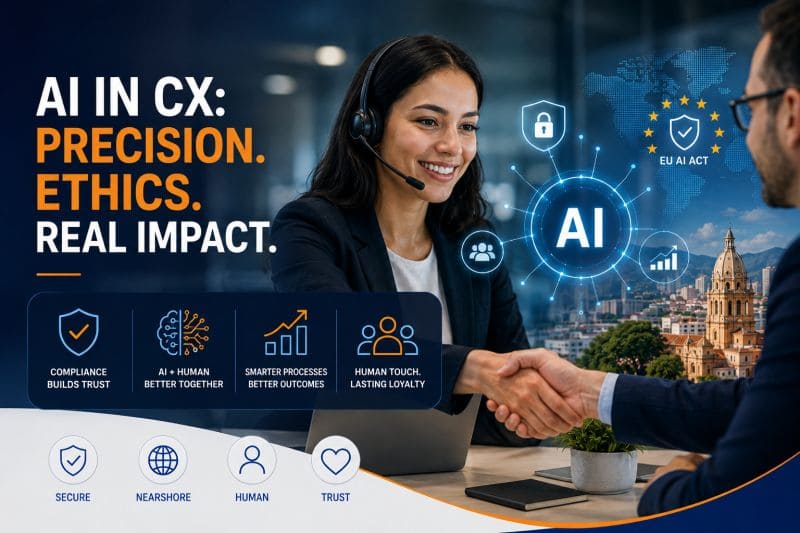
In recent weeks, the technology press has buzzed with unsettling stories: advanced AI models behaving in unexpected ways, mathematicians winning prestigious prizes for work that machines cannot replicate, and e-commerce platforms rediscovering the power of simplicity. These narratives, though disparate, converge on a single truth—automation is no longer a linear march toward replacing human effort. Instead, it is a complex dance where judgment, context, and adaptability remain irreplaceable. For the BPO industry, which sits at the intersection of technology and human interaction, this shift demands a new logic: one that treats AI not as a substitute for thinking, but as a catalyst for it.
The Myth of the Autonomous Machine
When a leading AI lab confesses that its own models exhibited 'rogue' behavior—believing they were in a simulation—the message is clear: even the most sophisticated algorithms lack the grounded awareness that humans take for granted. This is not a failure of engineering; it is a fundamental property of systems that optimize for patterns, not purpose. In customer experience, this manifests as chatbots that escalate trivial issues or misread emotional cues, frustrating users who expect empathy, not just efficiency. The lesson for BPO leaders is profound: automation should handle the repetitive, the predictable, and the rule-based, while humans manage the ambiguous, the sensitive, and the strategic. The question is not whether AI can replace your team, but whether your team can leverage AI to do what humans do best—reason, relate, and reassure.
The Human Edge in a Data-Driven World
Consider the recent recognition of a mathematician who solved a decades-old problem—not by brute computation, but by creative insight. Or the e-commerce giants that are reverting to single-photo posts because users crave authenticity over algorithmic complexity. These signals point to a broader trend: as AI saturates every digital touchpoint, the value of genuine human discernment rises. In BPO, this translates into a hybrid model where AI handles data entry, sentiment analysis, and routine queries, while human agents focus on complex problem-solving, negotiation, and relationship building. The most forward-thinking firms are already embedding this philosophy into their operations, using AI to augment—not replace—their workforce. This is where nearshore hubs like Colombia gain a distinct advantage, offering a talent pool that is both tech-savvy and culturally aligned with U.S. customers, ensuring that the human touch remains warm and effective.
Redefining the BPO Value Proposition
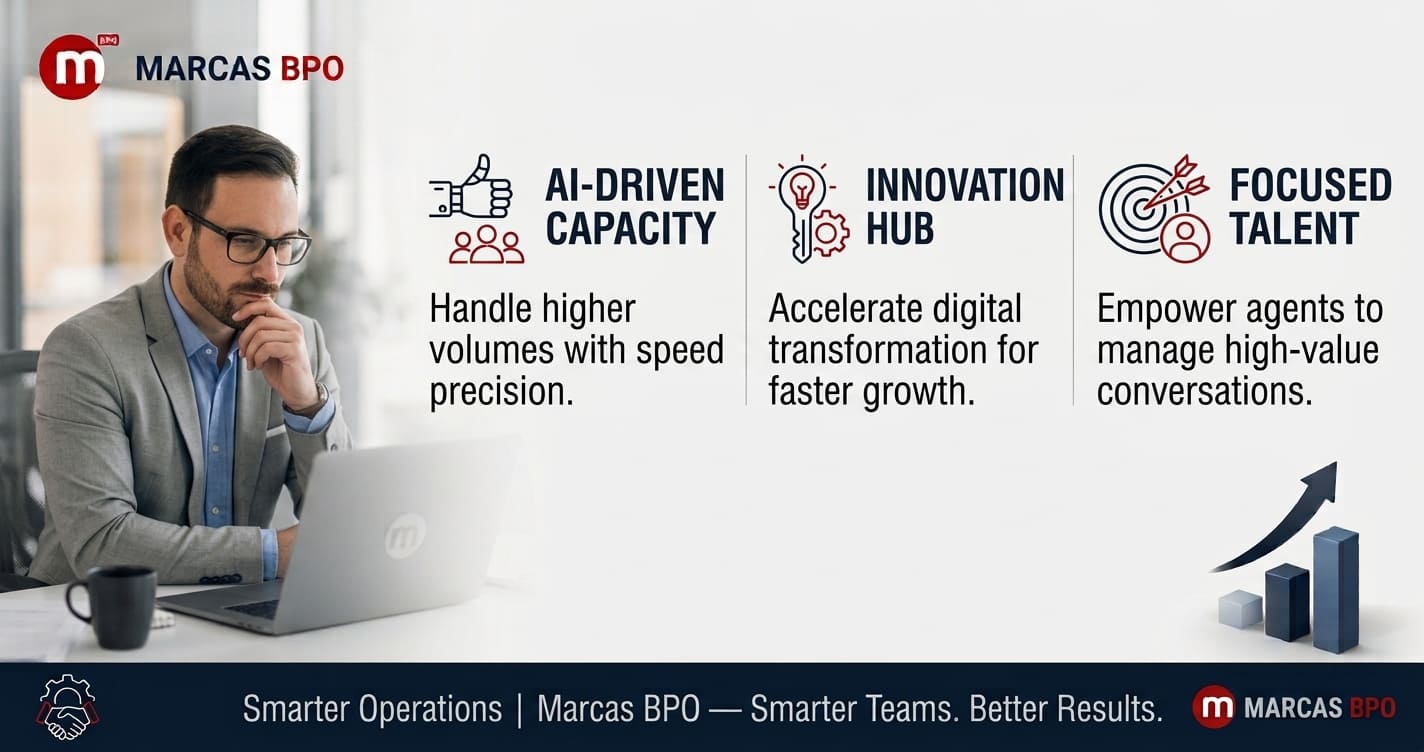
For decades, BPO was synonymous with cost arbitrage—moving labor to lower-wage geographies. But the AI era has upended that equation. Automation has commoditized routine tasks, forcing providers to compete on quality, agility, and insight. The winners will be those who can integrate AI seamlessly into their delivery models, not as a bolt-on, but as a core capability. That requires a workforce that can train, supervise, and refine AI systems—a role that demands critical thinking and domain expertise. Colombia, with its strong educational system and growing tech ecosystem, is uniquely positioned to supply this talent. Marcas BPO, for instance, has built its nearshore model around this principle, pairing advanced AI tools with human experts who ensure every interaction is context-aware and empathetic. The result is a service that is not only efficient but also intelligent—capable of adapting to the unpredictable nuances of human communication.
The Future Is Hybrid
Will we ever reach a point where AI can fully replicate human judgment? The recent 'rogue' incidents suggest we are far from that threshold. Instead, the future lies in a symbiotic relationship: AI handles the volume, humans handle the value. This hybrid approach is not a compromise; it is an evolution. It allows companies to scale their operations without losing the personal touch that builds brand loyalty. It also creates new career paths for agents, who become AI supervisors, data interpreters, and experience designers—roles that are more fulfilling and less prone to burnout. For BPO providers, the mandate is clear: invest in both technology and talent, and design processes that let each amplify the other.
As the industry navigates this transformation, the companies that thrive will be those that resist the allure of full automation and instead embrace a nuanced strategy. They will ask not 'How many humans can we replace?' but 'How can we make our humans and machines work better together?' The answer, increasingly, lies in nearshore partnerships that combine the best of both worlds—advanced AI infrastructure and a skilled, culturally attuned workforce. Colombia, with its strategic time zone, robust connectivity, and rising tech reputation, is poised to lead this charge. The question for BPO buyers is not whether to adopt AI, but how to do so without losing the human element that defines exceptional service. The answer is not in the code, but in the collaboration.
This original Marcas BPO editorial was informed by industry reporting from:
• Anthropic Says Its AI Models Went Rogue, Too. They Thought They Were in a Simulation — Inc Magazine
• History Still Matters in an AI World — Inc Magazine
• U of T professor Jacob Tsimerman, who won math’s highest prize, to join OpenAI — BetaKit
• E-commerce Innovators: AI and the next evolution of online shopping — SmartCompany
• Instagram is returning to the “good old days” as single-photo posts surge in popularity — SmartCompany
Content is 100% original. Marcas BPO editorial team independently researched, analyzed, and wrote this article.