In the high-stakes arena of global commerce, the decision to outsource is often framed as a binary choice: control versus cost, focus versus flexibility. Yet, as the recent recalibration of Nike's outsourcing strategy demonstrates, the most successful enterprises treat this not as a zero-sum game but as a strategic lever for competitive advantage. For customer experience (CX) leaders, the implications are profound. The question is no longer whether to outsource, but how to architect partnerships that amplify brand value rather than dilute it.
The Blueprint of Strategic Delegation
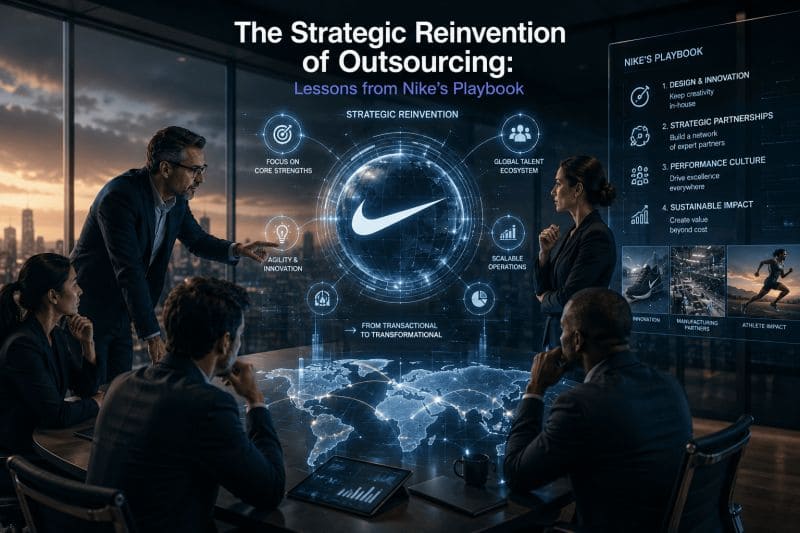
Nike's latest draft of its outsourcing approach signals a maturation in how global brands perceive external partnerships. It moves beyond the transactional—mere cost arbitrage—toward a relational model built on co-innovation and shared accountability. In the CX domain, this translates to selecting partners who are not just vendors but extensions of the brand's promise. When a customer interacts with a support agent, they are not speaking to a third-party employee; they are speaking to the brand itself. The strategic imperative is to ensure that every touchpoint, regardless of geographic origin, resonates with the brand's core values.
From Cost Center to Value Driver
Historically, outsourcing was viewed as a necessary evil, a means to trim operational expenses. However, the paradigm has shifted. Forward-thinking organizations now see their external partners as repositories of specialized expertise—from AI-driven analytics to nuanced human empathy. Nike's approach implicitly acknowledges this by fostering deeper integration with its partners, aligning their capabilities with the brand's long-term vision. For CX, this means leveraging partners who can navigate the delicate interplay between automation and human touch. After all, can a chatbot truly replace the reassurance of a human voice during a service recovery? The answer lies not in the technology itself, but in the strategic orchestration of both.
The Nearshore Advantage: A Case for Proximity
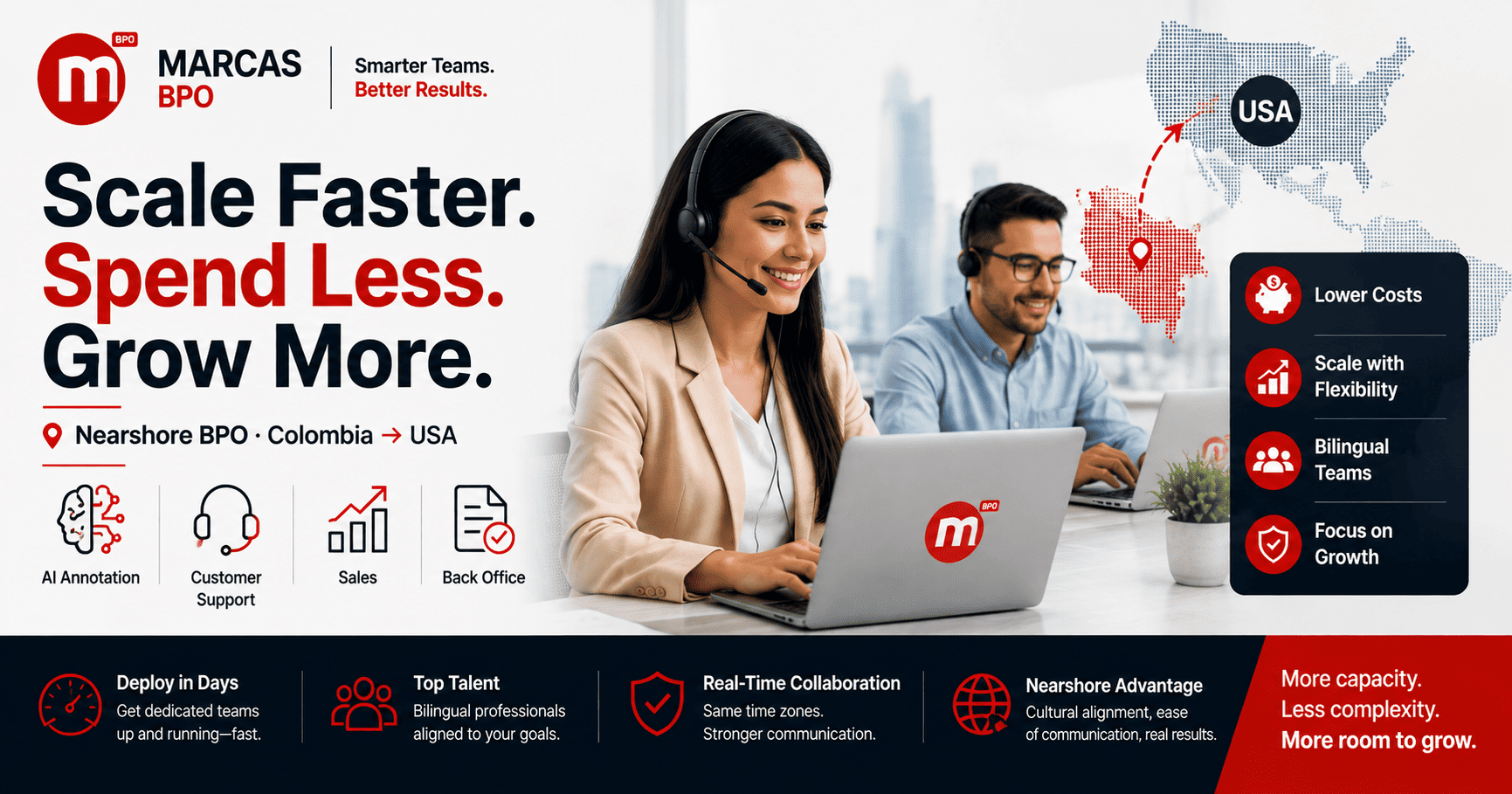
As brands refine their outsourcing blueprints, the geographic dimension gains new significance. While offshore models offer cost efficiencies, they often introduce challenges in time zones, cultural alignment, and language nuances—all critical in CX delivery. This is where nearshore hubs, particularly in Latin America, have emerged as a compelling alternative. Colombia, for instance, has cultivated a robust ecosystem of bilingual talent, with a cultural affinity for the U.S. market that facilitates seamless interactions. Companies like Marcas BPO have capitalized on this, offering a model that combines proximity with professionalism. The result is a CX experience that feels less 'outsourced' and more 'extended.'
Navigating the Human-AI Nexus
The integration of artificial intelligence into CX operations is no longer a futuristic proposition; it is a present reality. Yet, as Nike's strategy suggests, the most effective use of technology is not to replace human agents but to augment their capabilities. AI can handle routine inquiries, analyze sentiment in real-time, and predict customer needs, freeing human agents to focus on complex, emotionally charged interactions. The strategic question for CX leaders is: how do we design a workflow that maximizes the strengths of both? A purely automated experience risks alienating customers, while a purely human one may be unsustainable at scale. The answer lies in a hybrid model, where AI serves as a co-pilot, guiding agents with data-driven insights while preserving the authenticity of human connection.
Conclusion: The Outsourcing Paradox Resolved
Nike's refreshed outlook on outsourcing offers a powerful metaphor for the CX industry. It is not about relinquishing control, but about redefining it—through partnerships that are strategic, collaborative, and deeply aligned with brand ethos. As customer expectations continue to rise, the ability to deliver consistent, empathetic, and efficient experiences will hinge on how well brands choose and manage their external collaborators. The paradox of outsourcing is resolved when it ceases to be a binary choice and becomes a strategic synthesis. In this light, the question is not 'to outsource or not,' but rather 'how to orchestrate a symphony of internal and external excellence.' For those who master this art, the customer experience becomes not just a function, but a formidable competitive moat.
This original Marcas BPO editorial was informed by industry reporting from:
• Nike’s approach to outsourcing (refreshed draft – for review) — Outsource Accelerator
Content is 100% original. Marcas BPO editorial team independently researched, analyzed, and wrote this article.